Ask a parent what a good meal with a small child is, and the answer is almost always about the food: how much, how healthy, how many vegetables. But the most important thing about a meal in the first thousand days is rarely what is on the plate. It is the mood it is eaten in.
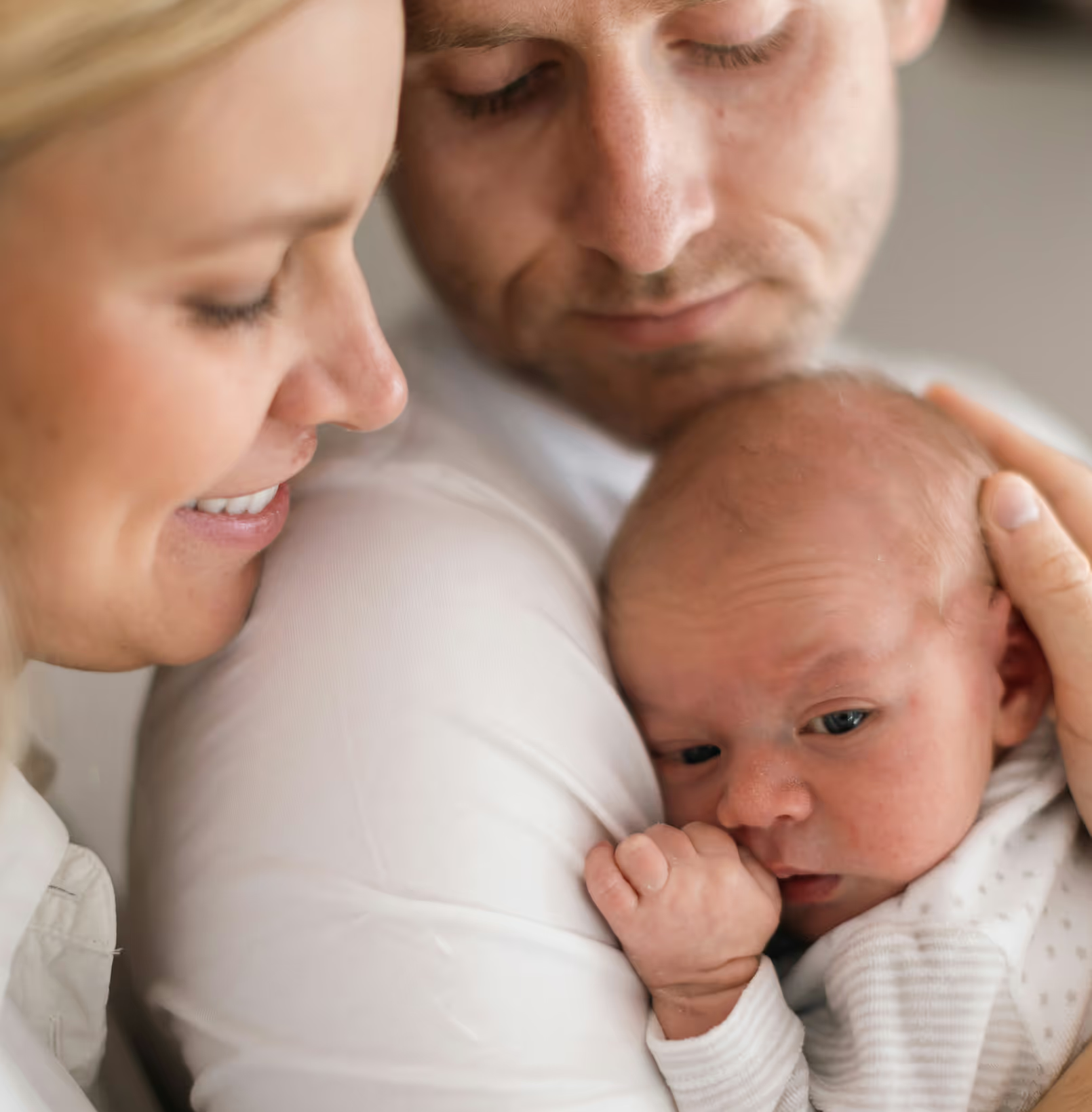
Breast and bottle are first of all moments of relationship. What matters most is not the method, but the closeness, the eye contact and following the baby's signals. When the baby is breastfed, oxytocin is released in the mother, but it is worth knowing that a bottle given with calm, presence and a gaze activates many of the same circuits. It is the relationship that counts, not the method of delivery. There is no one right way to do it, only the one that works for the two of you.

When the baby later has to learn to eat solid food, something happens that is easily misunderstood. The baby spits the food out, turns its face away, closes its mouth. It looks like rejection, but it is competence. The baby is born with a remarkable ability to regulate for itself how much it needs, if it is allowed to listen to its hunger and its fullness. If we press, »just two more spoonfuls«, or reward, »finish up and you'll get dessert«, the baby learns over time to overhear its own inner signals and eat by ours instead. We think we are helping. But we are disturbing a system that works.
There is also a biochemical reason to protect the calm at the table. Pressure and a battle over food raise cortisol in the middle of the meal and couple food together with stress. A calm, social meal does the opposite: it activates the part of the nervous system called »rest and digest«, which supports both good digestion and the desire to eat. The mood at the table settles all the way down into the stomach. It is part of the meal itself, not just the frame around it.
It also explains the classic worry about the small child who suddenly will only eat the familiar. That reluctance towards the new is not fussiness in any moral sense. It is an age-appropriate, deeply human trait that once protected small humans from eating something dangerous. The way forward is not a battle, but repetition without pressure: offering the new again and again beside the familiar, and letting the child come to it at its own pace.
This is the kind of thing it is nice to understand calmly, free of the evening's frustration. And when the very concrete question arrives, what do I do with this meal, this phase, this child, that is where the app can meet you where you are.