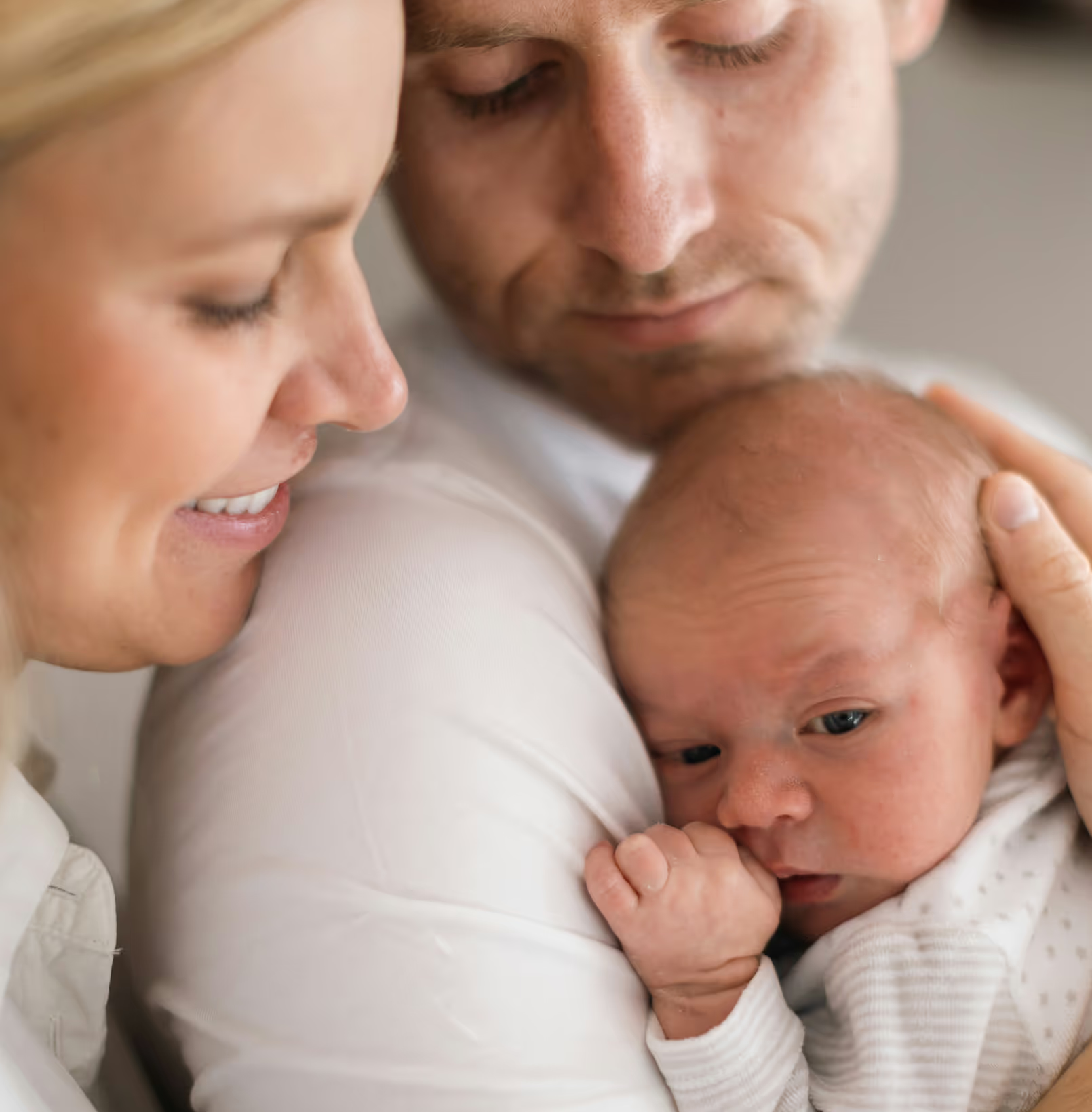
One of the most beautiful moments in a small child's development looks like nothing. You say something. The baby answers with a sound, an expression, a movement. You answer again. There are no words in it, and yet it is a conversation. Researchers call it a proto-conversation, and this is where all of language begins, long before the first real word.
We tend to think that language is something we teach the child, the way you teach it to tie shoelaces. But language is not a skill you pour into a child from the outside. It is something that grows in the space between two people. The primary thing is not the words. It is the turn-taking, the rhythm of »now me, now you«, which the baby practises hundreds of times a day in glances, sounds and small pauses. The one who waits for the baby's turn teaches it more about language than the one who talks a great deal.
Inside, something concrete happens while you take turns. The areas of the brain that will later carry language are formed and strengthened actively when an adult responds to what the baby does. The baby's brain looks for a connection between what it does itself and what happens next. When a sound from the baby reliably brings an answer from you, it lays a cornerstone: what I do matters, and the world answers. It is this sensitive exchange, not the sheer number of words, that best predicts how language unfolds.

It also explains why language from a screen works so much worse than language from a face. A video talks, but it does not answer. It does not wait for the baby's turn, it does not adjust to the baby's gaze, it does not sense when the baby is ready. Living language is a dance between two. Recorded language is a monologue, and a small brain built for interaction gets very little from a monologue.
As the child grows older, play becomes the very medium that language is drawn out in. In pretend play the child practises not only words but understanding that others have their own thoughts and feelings, one of the most complicated things a human brain can learn, and something built only through interaction, never through a screen. Language and play and relationship are the same movement seen from three sides.
It is worth understanding, because it takes the pressure off. You do not have to teach your child. You just have to answer. And if you want to know what is age-appropriate right now, or whether something is worth keeping an eye on, you can follow it together with Helen in the app.