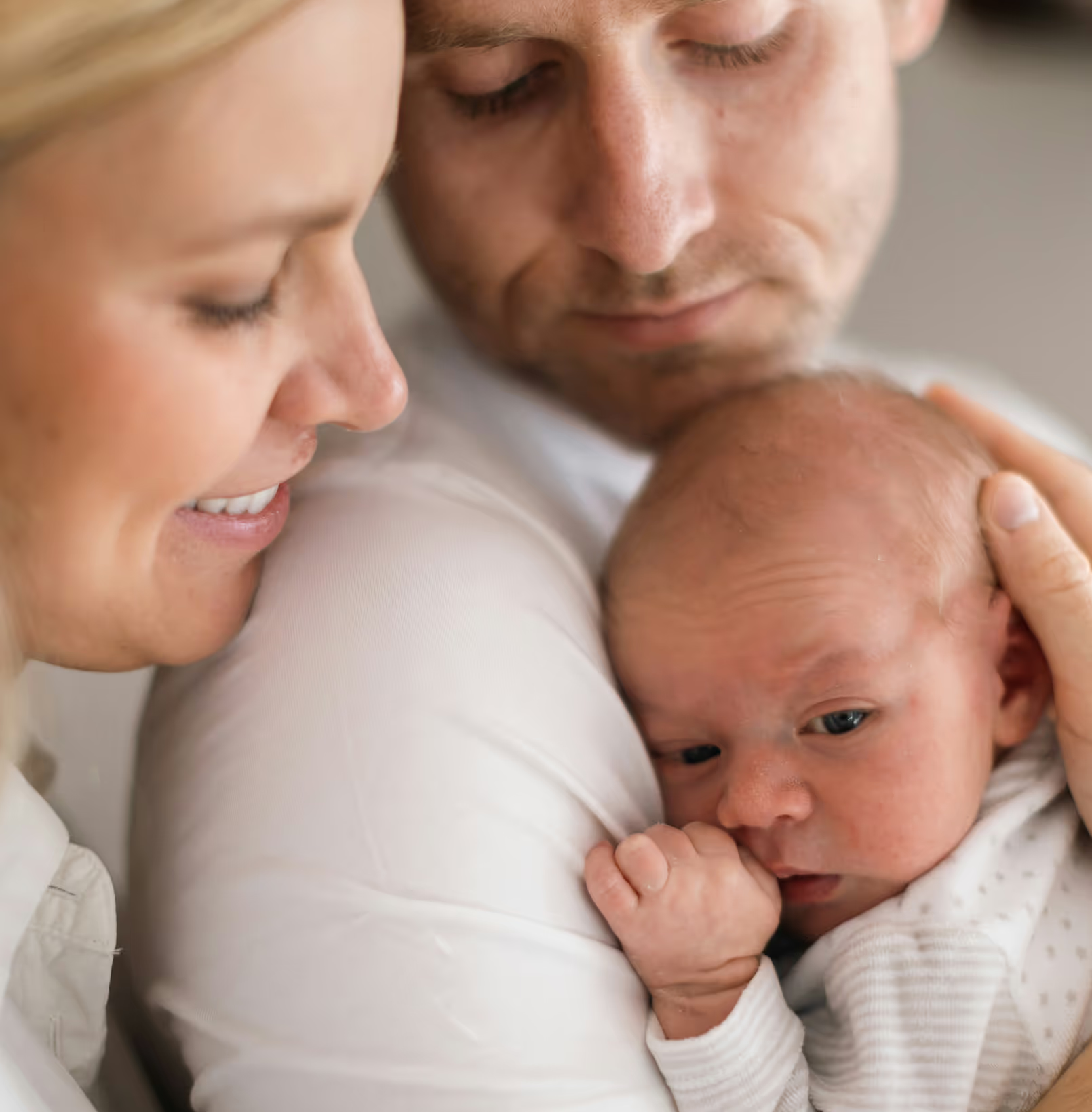
When the baby came, you may have thought you were two people who now had to cooperate on a task. But something else happened. You became one new system, two nervous systems bound together by sleep deprivation, responsibility and love, and that system has laws entirely of its own.
Most of what looks like arguments in the early parenting days is not disagreement. It is two exhausted nervous systems colliding. When sleep is scarce, cortisol is chronically raised in both of you, and chronically raised cortisol does exactly two things to a person: it lowers empathy and raises reactivity. In other words it becomes harder to hold the other, and easier to flare up. It is not a character flaw. It is predictable biochemistry, and it helps surprisingly much simply to know it and be able to say it out loud: I'm reacting to the tiredness, not to you.
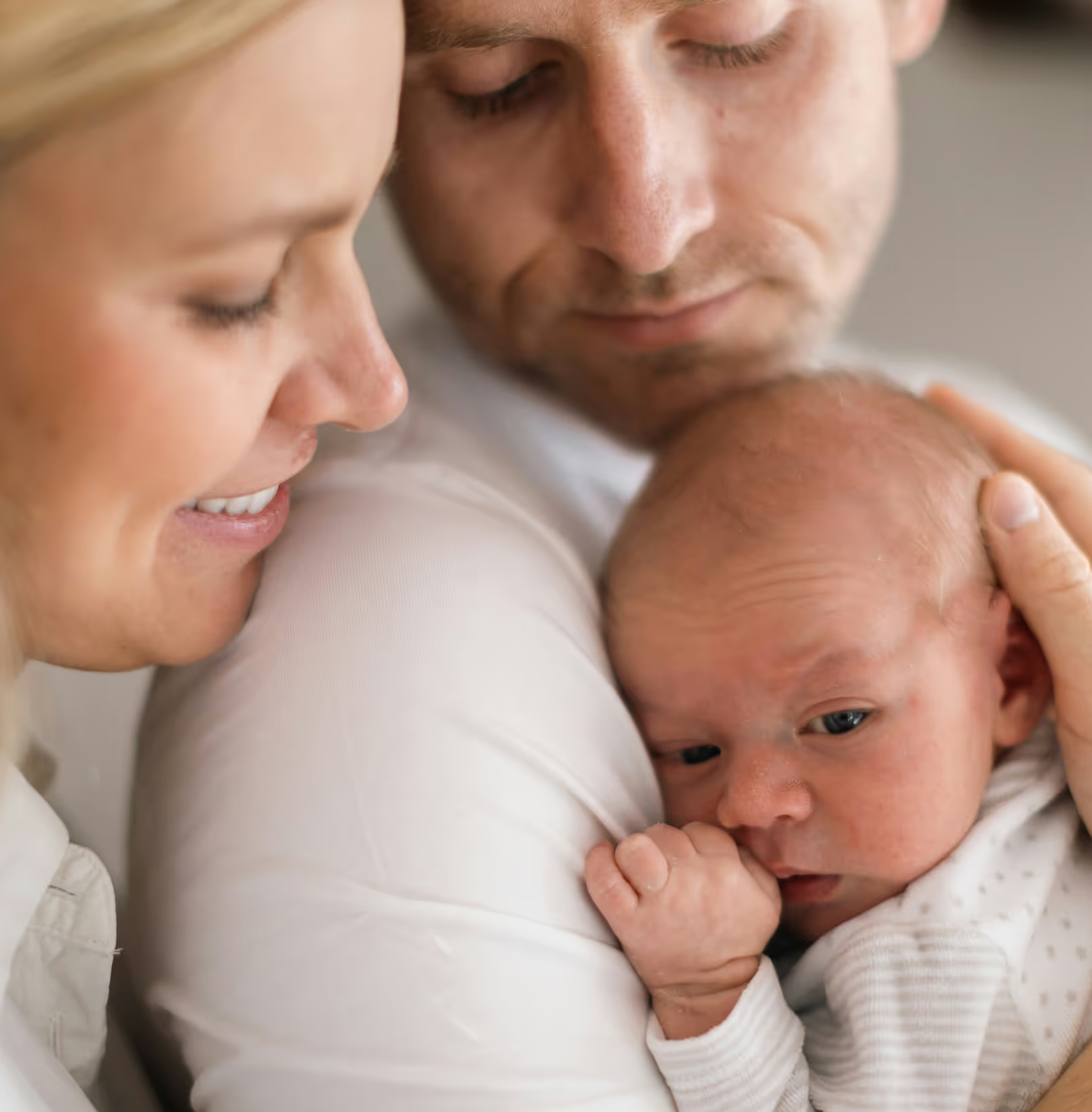
The interesting part, and the one few are told, is how much the relationship matters for the child. The single factor that best predicts a small child's wellbeing is not whether the parents do each thing right. It is the relationship between the parents. The level of conflict between you is a stronger marker for the child's stress response than most of the individual decisions you make about the child. The baby borrows your nervous systems, as we know, and two nervous systems in constant alarm are hard to borrow calm from.
It does not mean you must never disagree. Children benefit from seeing that conflict can arise and be resolved again, just as they benefit from being met after a hard moment. What wears things down is not the disagreement, but the patterns that are allowed to settle: the criticism, the withdrawal, the silent comparison of who does the most. Those patterns are hard to break once they have taken root, and they form right now, when the pressure is greatest.
Differences in how you each approach parenthood are not necessarily a problem. One of you is perhaps more forthcoming, the other more watchful. They are rarely shortcomings. They are usually two ways of loving the same child. It only turns into something harmful when the differences become unspoken expectations, and the expectations become silent criticism.
That is why it is worth understanding that looking after the two of you is not a luxury alongside parenthood. It is part of it. And when you stand in the concrete patterns and want help finding your way back to each other, you can take it further, together, with support from the app.